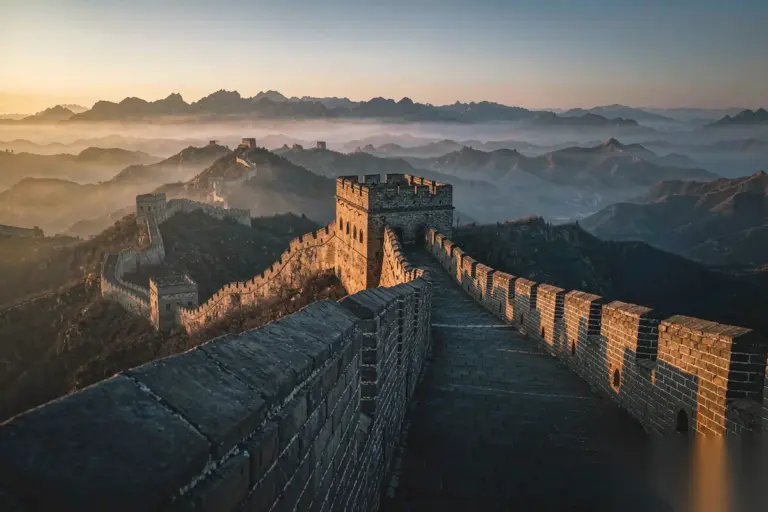
Suzhou is a city of gardens. Not big, showy gardens — small, quiet ones, hidden behind plain white walls in the middle of an old canal town.
There are dozens of them. Nine are UNESCO World Heritage sites. And they share one idea that explains almost everything about Chinese aesthetics.
The idea: borrowed scenery
Chinese gardens don’t try to contain everything. They borrow.
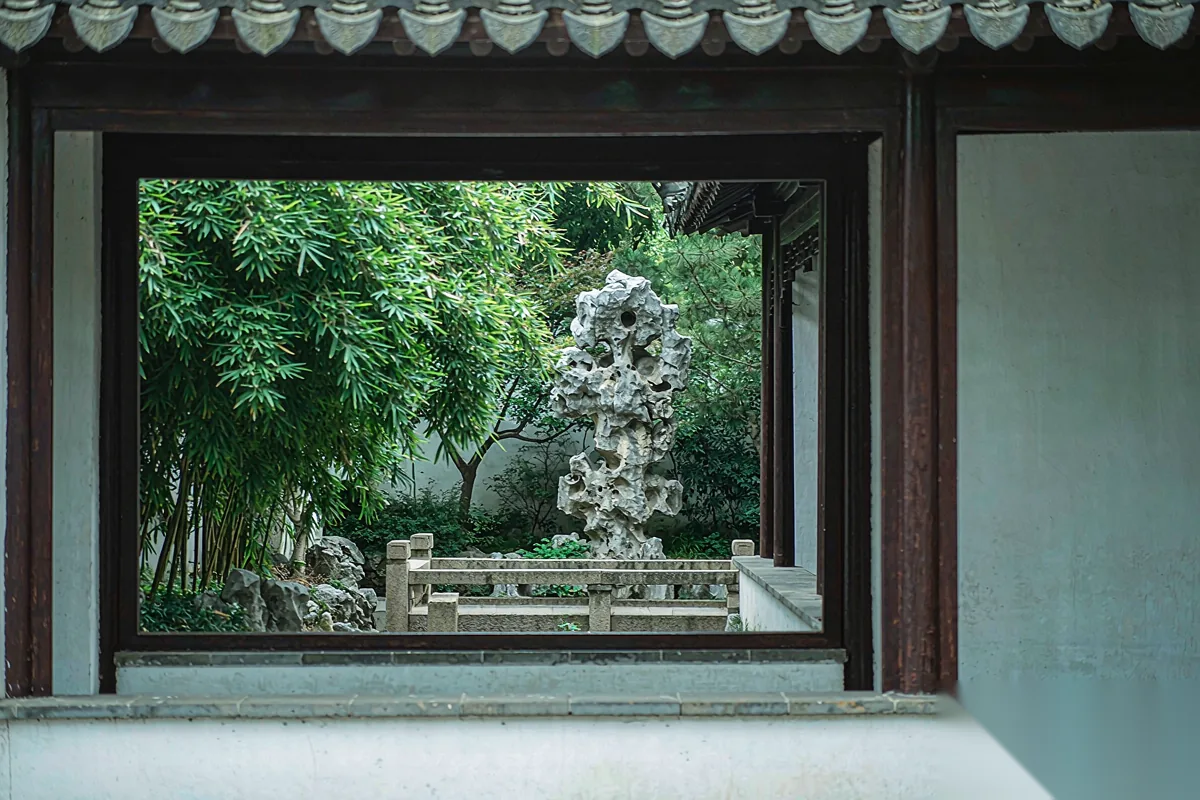
A window frames a bamboo grove. A moon gate reveals a rock. A pond reflects a distant pagoda. The garden extends beyond its walls by borrowing what’s outside.
This is called 借景 (jièjǐng) — “borrowed scenery.” It’s the core principle.
The elements
Every classical garden has the same vocabulary:
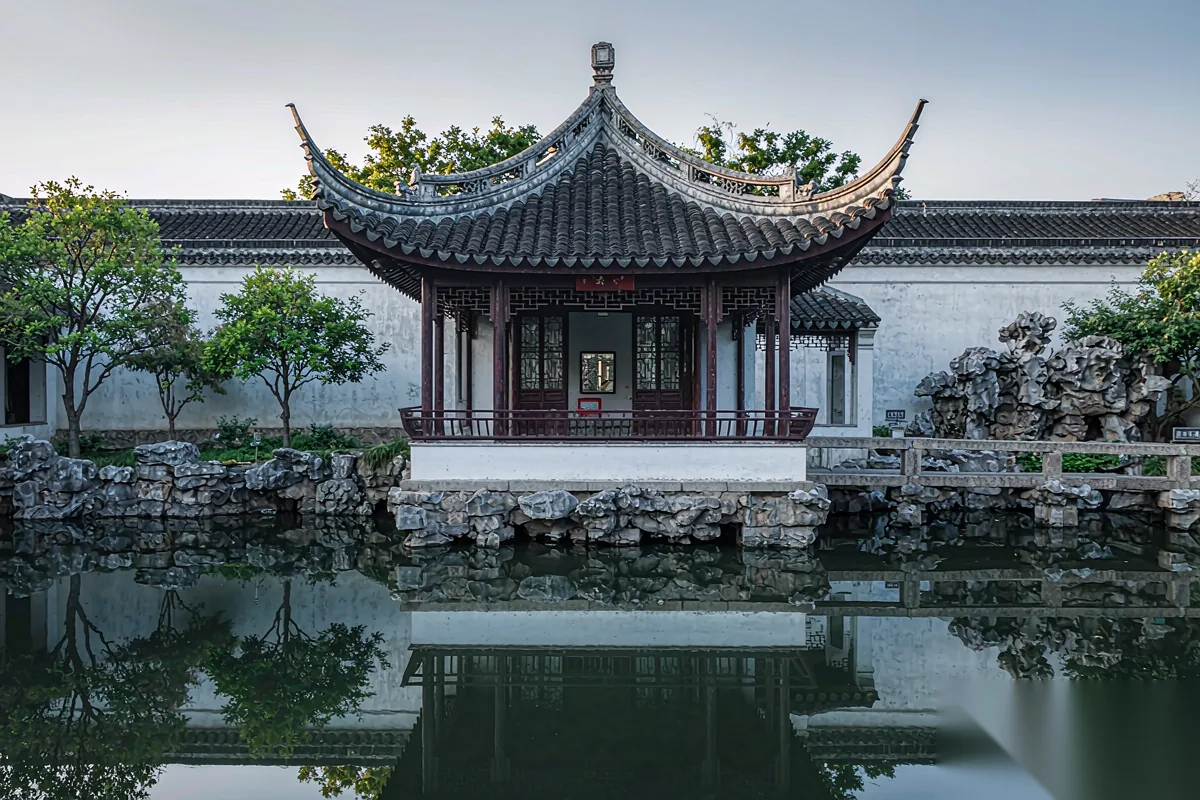
- Water: ponds, streams, reflections. Water is the soul of the garden.
- Rockery: strange stones, especially from Lake Tai, full of holes and hollows.
- Pavilions: small buildings for sitting, drinking tea, and looking.
- Corridors: covered walkways that frame views as you move.
- Walls: white with grey tiles, often with windows cut into them.
Nothing is accidental. Every window, every stone, every turn of the path is designed to create a picture.
The Humble Administrator’s Garden
The largest and most famous is the Humble Administrator’s Garden (拙政园), built in 1509.
The name is ironic — the official who built it had been demoted, and claimed he was now “humble” enough to tend a garden.
It’s about five hectares of ponds, pavilions, and rockeries. You can spend three hours there and still not see it all.
Why so small?
Suzhou gardens are tiny compared to European palaces. The largest is about five hectares; most are under one.
That’s the point. The garden isn’t about size — it’s about compression. Small spaces, carefully composed, feel larger than they are.
Walking through one is like turning pages: each step reveals a new view.
How to visit
- Go early: 7:30–9:00 is quiet.
- Pick two or three: seeing all nine is exhausting.
- Sit down: the gardens are designed for lingering, not rushing.
- Look through windows: the framed views are the point.
Want the full story?
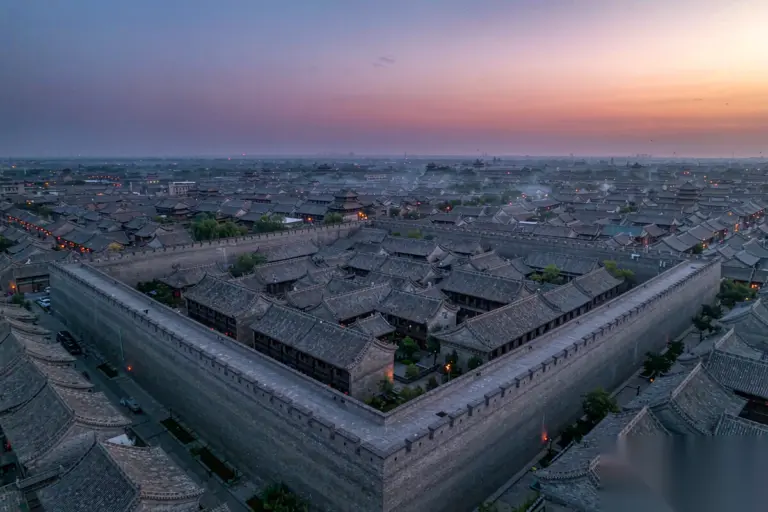
Our book Old Chinese Towns covers Suzhou, Pingyao, Lijiang, and more — places where Chinese architecture and daily life still meet.
And for the big imperial architecture, Great Chinese Architecture is the companion.