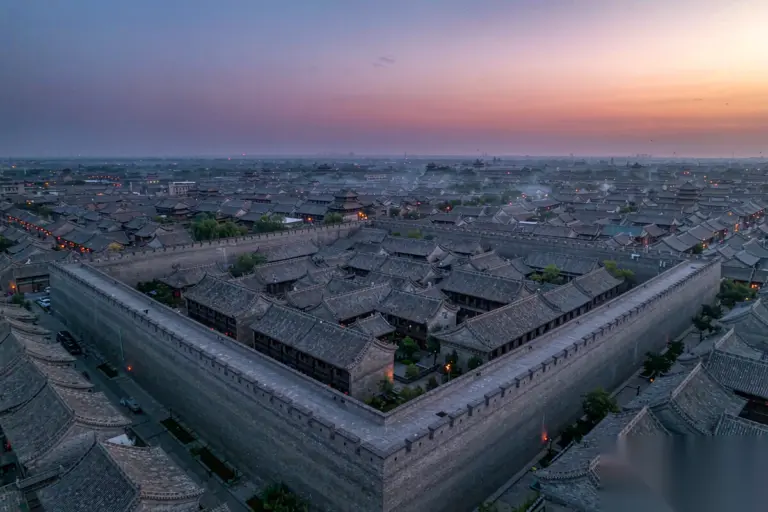
In 1974, a farmer digging a well in Shaanxi province hit something hard. He thought it was a rock. It was the head of a clay soldier.
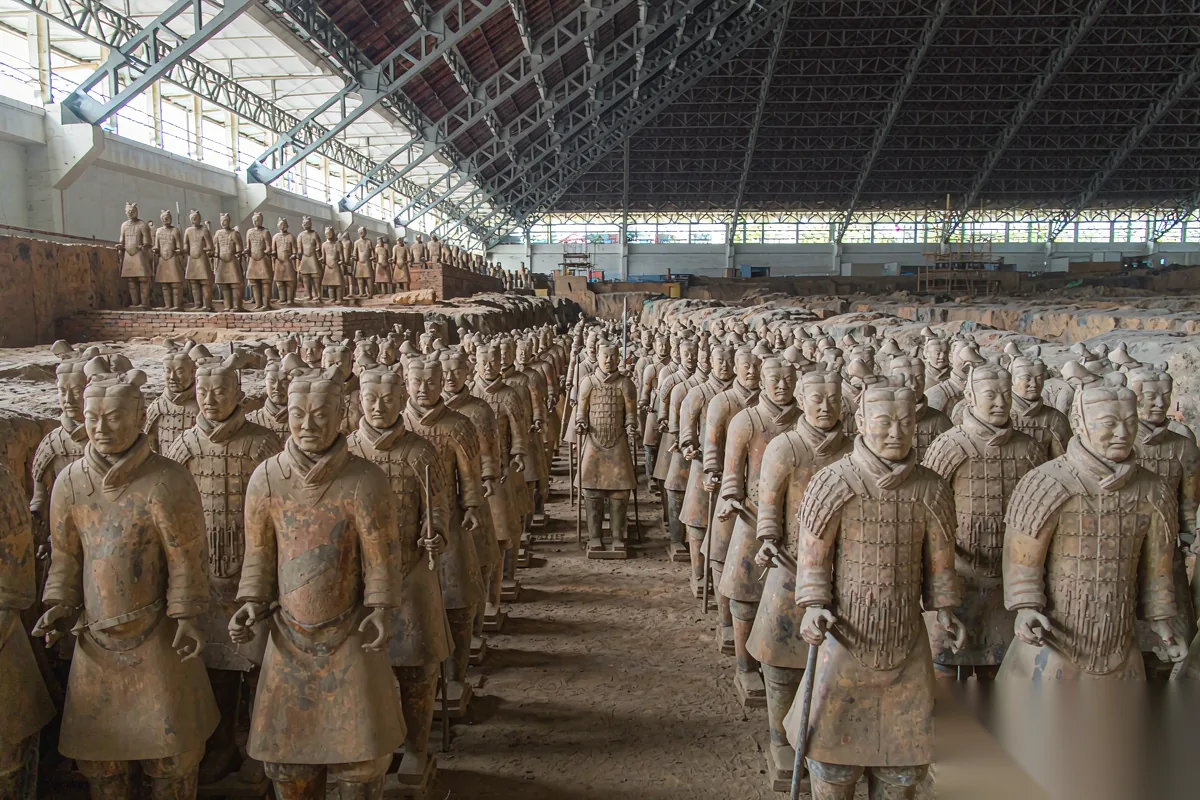
That accidental discovery uncovered the Terracotta Army — thousands of life-sized soldiers, horses, and chariots, buried for 2,200 years.
Here’s the story behind them.
Who built them?
Emperor Qin Shi Huang — the First Emperor of China, the man who unified the country in 221 BC.
He started building his tomb at age 13. The project took about 38 years and 700,000 workers. The warriors were part of it: an army to protect him in the afterlife.
Why an army?
Qin Shi Huang had conquered six rival states to unify China. He had a lot of enemies — and, presumably, a lot of anxiety about what came next.
The army was insurance. If the afterlife worked like this life, he’d need soldiers.
They’re not identical
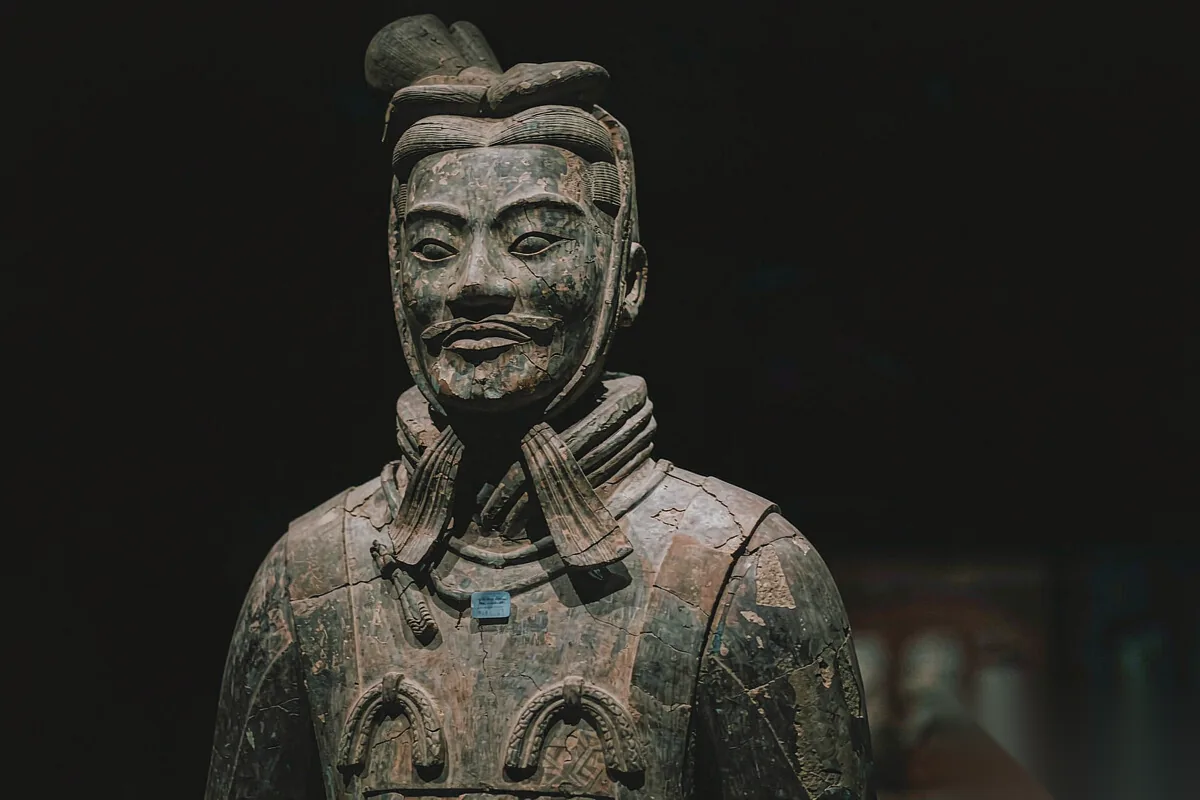
This is the thing that surprises people most: every soldier has a different face.
Archaeologists have identified about 10 basic face shapes, but each figure was individually finished — different expressions, hairstyles, and armor details.
It’s possible the artisans modeled them on real soldiers.
They used to be colorful
Today the warriors are grey-brown. Originally, they were painted in bright reds, blues, greens, and purples.
The problem: the paint flakes off within minutes of exposure to air. Archaeologists now excavate slowly, and some figures are left in the ground to protect their color.
The pits
- Pit 1: the largest, with thousands of warriors in battle formation
- Pit 2: cavalry, chariots, and archers
- Pit 3: the command post, with high-ranking officers
- Pit 4: empty — possibly unfinished
The tomb is still sealed
The emperor’s actual tomb — a hill 1.5 km away — has never been opened.
Ancient records say it contains rivers of mercury, a ceiling painted with stars, and crossbows rigged to shoot intruders. Soil tests have found unusually high mercury levels, which suggests the records might be accurate.
For now, it stays closed. Some doors are better left shut.
Want the full story?
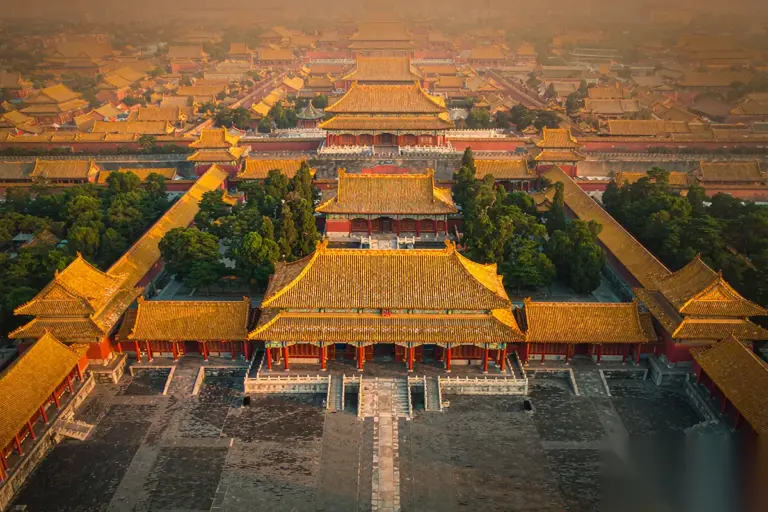
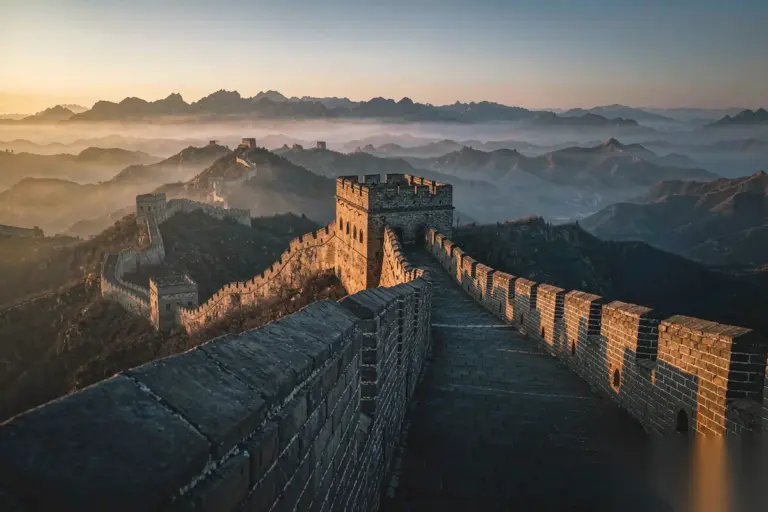
Our book Great Chinese Architecture covers the Terracotta Army, the Great Wall, and the Forbidden City — the stories behind the stones, in plain English.
And for more of China’s mythical beasts, The Classic of Mountains and Seas is the oldest field guide.