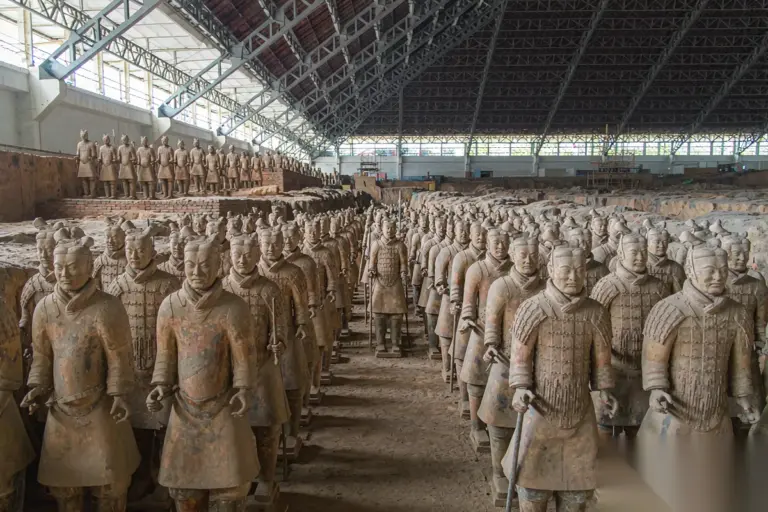
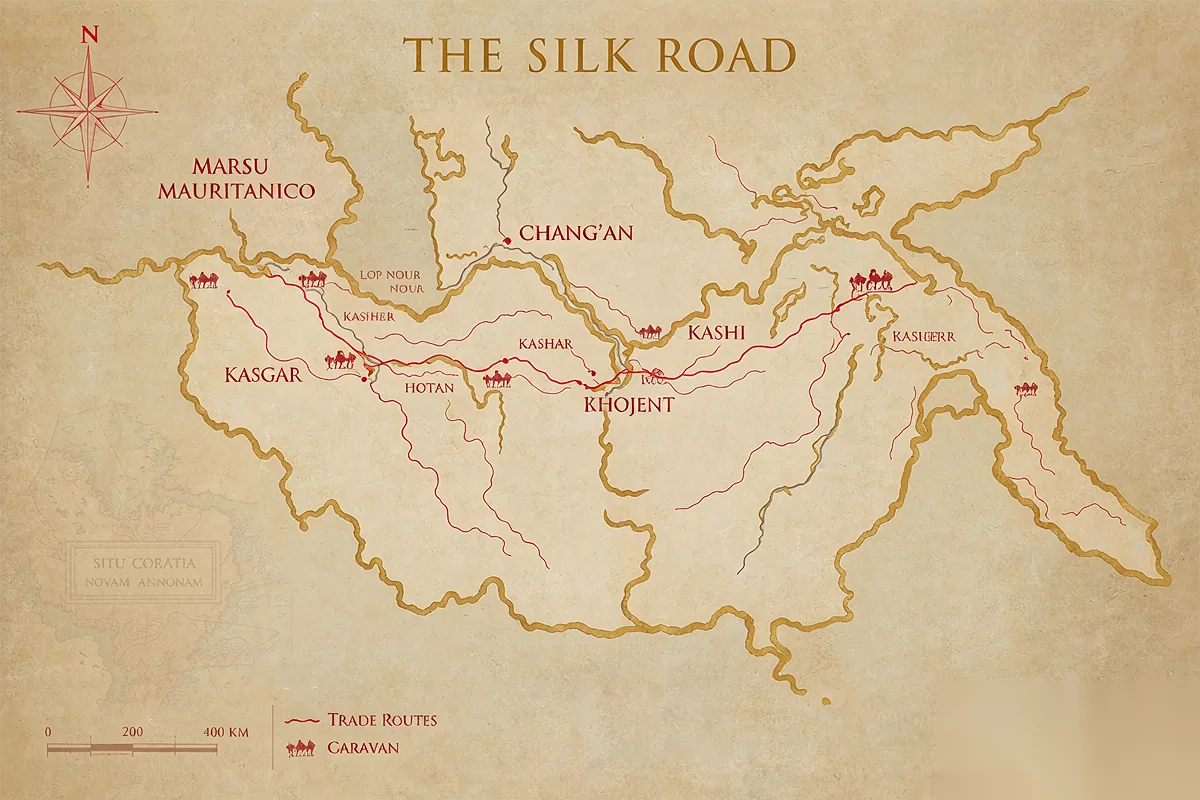
The Silk Road wasn’t a road. It was a network of trade routes connecting China to Central Asia, the Middle East, and Europe — and it carried far more than silk.
It shaped the world. Here’s the short version.
What it was
From roughly 130 BC to 1450 AD, goods moved across Asia along a web of routes — over mountains, through deserts, across seas.
Silk went west. Horses, glass, and silver came east. Ideas, religions, and diseases traveled with them.
The name “Silk Road” was coined in 1877 by a German geographer — the Chinese never called it that.
What traveled
- Silk: China’s monopoly for centuries. Romans paid in gold.
- Tea: later, and mostly by sea.
- Paper: invented in China, spread west by the 8th century.
- Gunpowder: also Chinese, also spread west.
- Buddhism: from India to China.
- Diseases: the Black Death likely traveled these routes.
The oasis towns
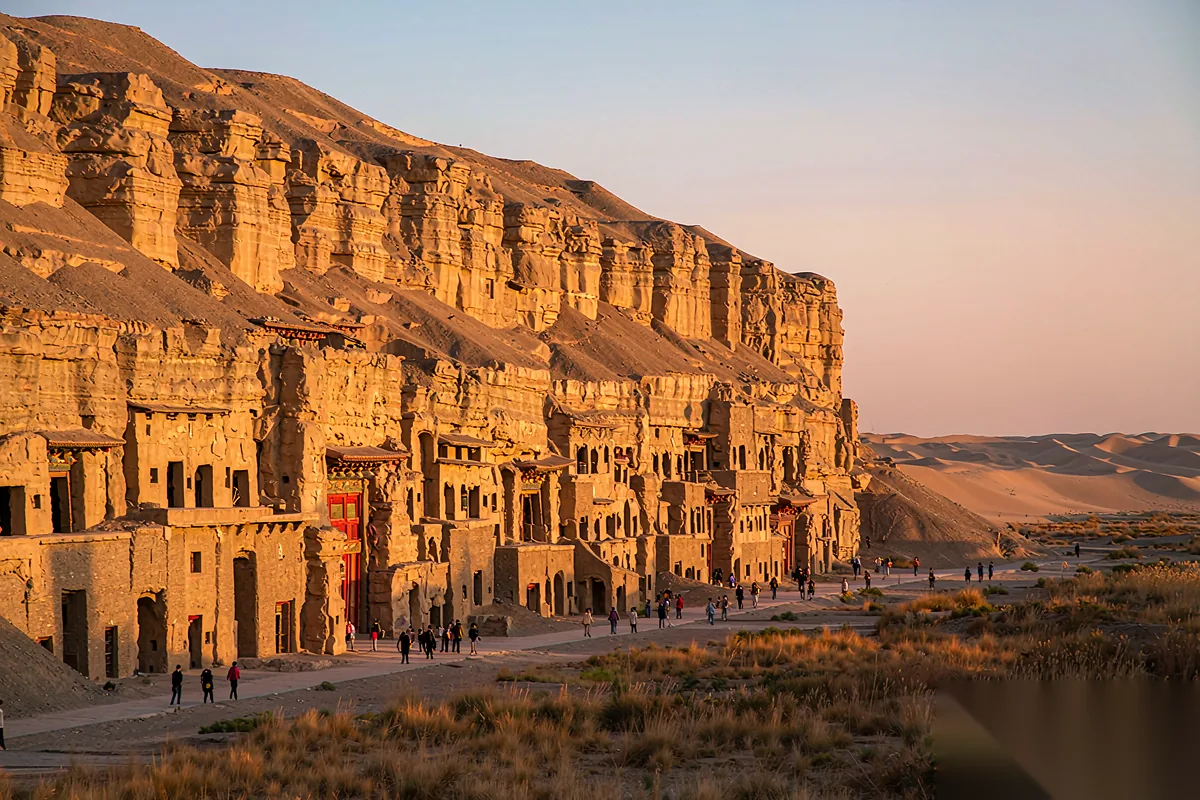
The routes ran through oasis cities: Dunhuang, Samarkand, Kashgar, Palmyra.
These towns grew rich on trade — and became cultural mixing bowls. Dunhuang’s Mogao Caves, with their Buddhist murals, are the most famous remnant.
The travelers
- Zhang Qian (2nd century BC): the Chinese diplomat who opened the routes. Captured twice, escaped twice.
- Xuanzang (7th century): the Buddhist monk who traveled to India and back. His journey inspired Journey to the West.
- Marco Polo (13th century): the Venetian who claimed to reach China. Historians still argue about how much he actually saw.
Why it ended
The Silk Road declined for several reasons:
- Sea routes became faster and safer.
- The Black Death disrupted trade.
- The fall of the Mongol Empire removed the stability that had protected the routes.
By 1450, the age of exploration was beginning — and Europe started looking for sea routes to Asia.
Why it matters
The Silk Road is the original globalization. Goods, ideas, and people had been moving across Asia for over a thousand years before Europeans “discovered” the East.
It’s a reminder that connection isn’t new. It’s ancient.
Want the full story?
Our book Great Chinese Architecture covers the buildings along these routes — and Chinese Folktales has the stories that traveled with the merchants.