China produces more tea than any country on Earth, and drinks it in a way that’s closer to wine tasting than to grabbing a cup on the go.
But the world of Chinese tea can feel like a locked door: green, black, oolong, pu’er, white, yellow — what’s the difference? Why does the same leaf become six different teas?
Here’s the simplest explanation you’ll find.
It’s all one plant
Every true tea — green, black, oolong, white, yellow, pu’er — comes from the same plant: Camellia sinensis.
The difference is how the leaves are processed. Specifically, how much they’re oxidized (exposed to air) before being dried.
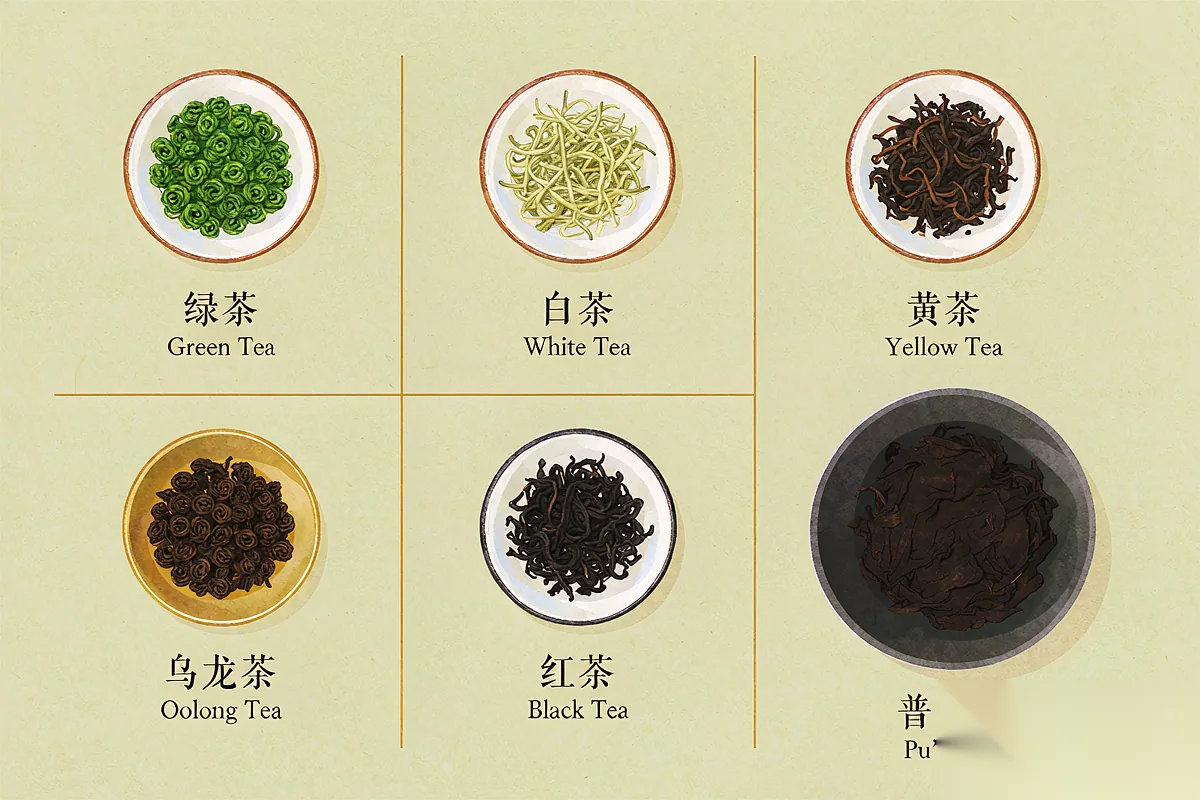
The six types, in order
Think of it as a spectrum from “barely processed” to “fully transformed”:
- Green tea (绿茶) — unoxidized. Fresh, grassy, bright. Examples: Longjing (Dragon Well), Bi Luo Chun.
- White tea (白茶) — barely processed. Delicate, sweet, floral. Examples: Silver Needle, White Peony.
- Yellow tea (黄茶) — lightly fermented, rare. Smooth, mellow. Example: Junshan Yinzhen.
- Oolong (乌龙茶) — partially oxidized (10–70%). Complex, floral, sometimes roasted. Examples: Tieguanyin, Da Hong Pao.
- Black tea (红茶) — fully oxidized. Malty, robust, sweet. Examples: Keemun, Lapsang Souchong.
- Pu’er (普洱) — fermented and aged. Earthy, deep, sometimes mushroomy. Raw (sheng) and ripe (shou).
The Chinese names are more accurate than the English ones. What the West calls “black tea,” China calls “red tea” (红茶) — because the liquid is red. China’s “black tea” (黑茶) is what the West calls “dark tea” — like pu’er.
How to brew it (without overthinking)
- Water: just off the boil for most teas — 80–90°C for green and white, 95–100°C for oolong and pu’er.
- Amount: a small handful of leaves for a pot. More than you think.
- Time: short steeps (20–60 seconds), repeated many times. Good tea can be brewed 5–10 times.
The “one spoon, five minutes” rule is for tea bags. Loose-leaf Chinese tea is different.
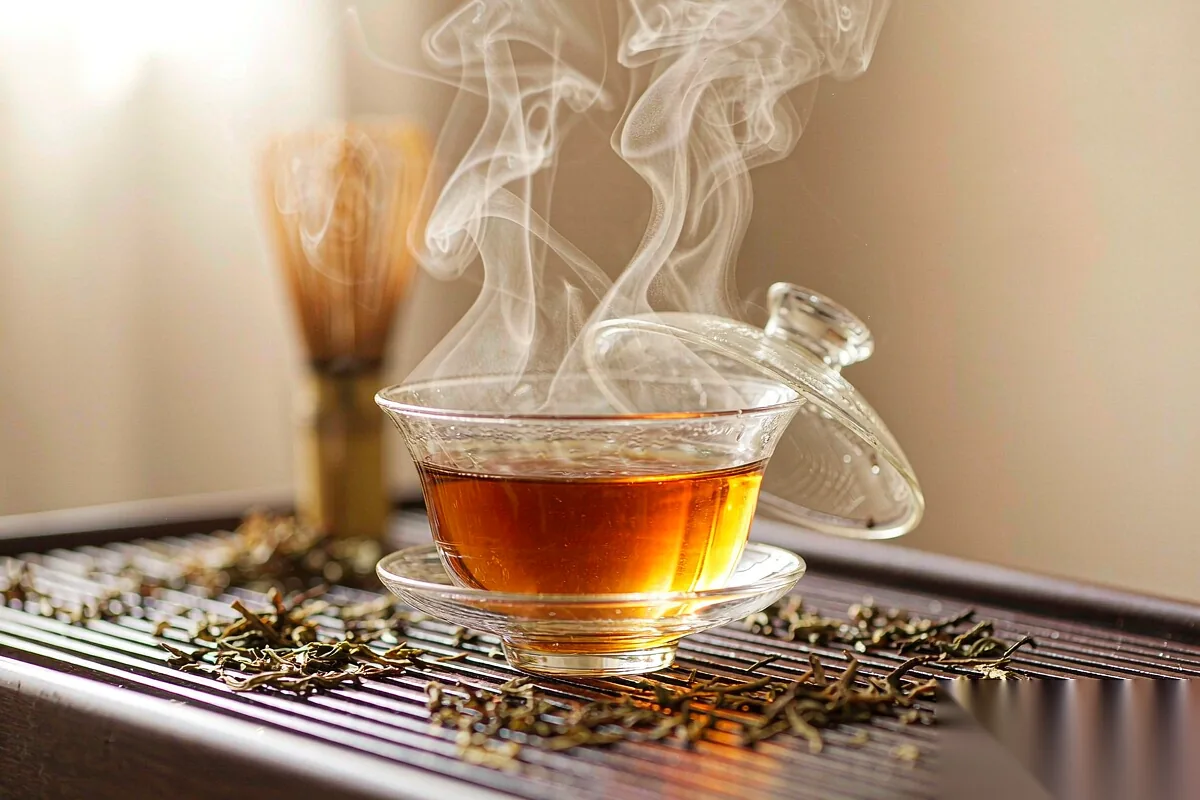
The tea ceremony myth
You don’t need a ceremony. Most Chinese people drink tea from a mug, a thermos, or a simple glass.
The fancy gongfu ceremony exists, and it’s beautiful — but it’s not required. Tea is daily life first, ritual second.
Where to start
If you’re new, start with:
- Longjing (Dragon Well) — the classic green tea, easy to love.
- Tieguanyin — a floral oolong, forgiving to brew.
- Keemun — a smooth black tea, good with milk or without.
Buy small amounts. Taste. Notice what you like. That’s the whole method.
Want the full story?
Our book The Story of Chinese Food & Tea covers tea’s history, its role in daily life, and the stories behind the leaves — in plain English.