Chinese New Year dinner is the most important meal of the year. Families travel thousands of kilometers for it. And almost every dish has a meaning, usually a pun.
Here’s what’s on the table and what it means.
The reunion dinner
New Year’s Eve is the “reunion dinner” (年夜饭). Families gather, eat, and stay up late. It’s the emotional center of the holiday.
The menu varies by region, but the meanings are shared.
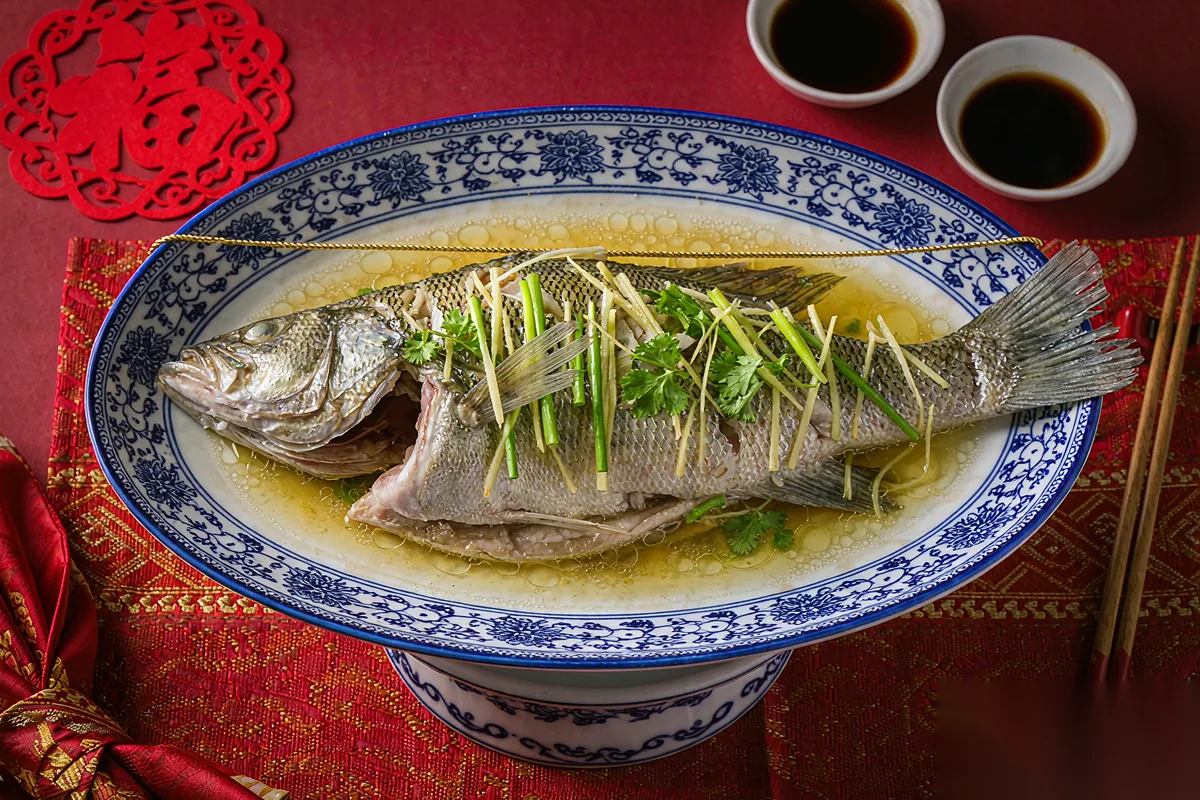
Fish — abundance
The word for fish (鱼, yú) sounds like “surplus” (余). So a whole fish is served — head and tail intact — to symbolize a year with more than enough.
But don’t finish it. Leaving some fish means “surplus every year.”
Dumplings — wealth
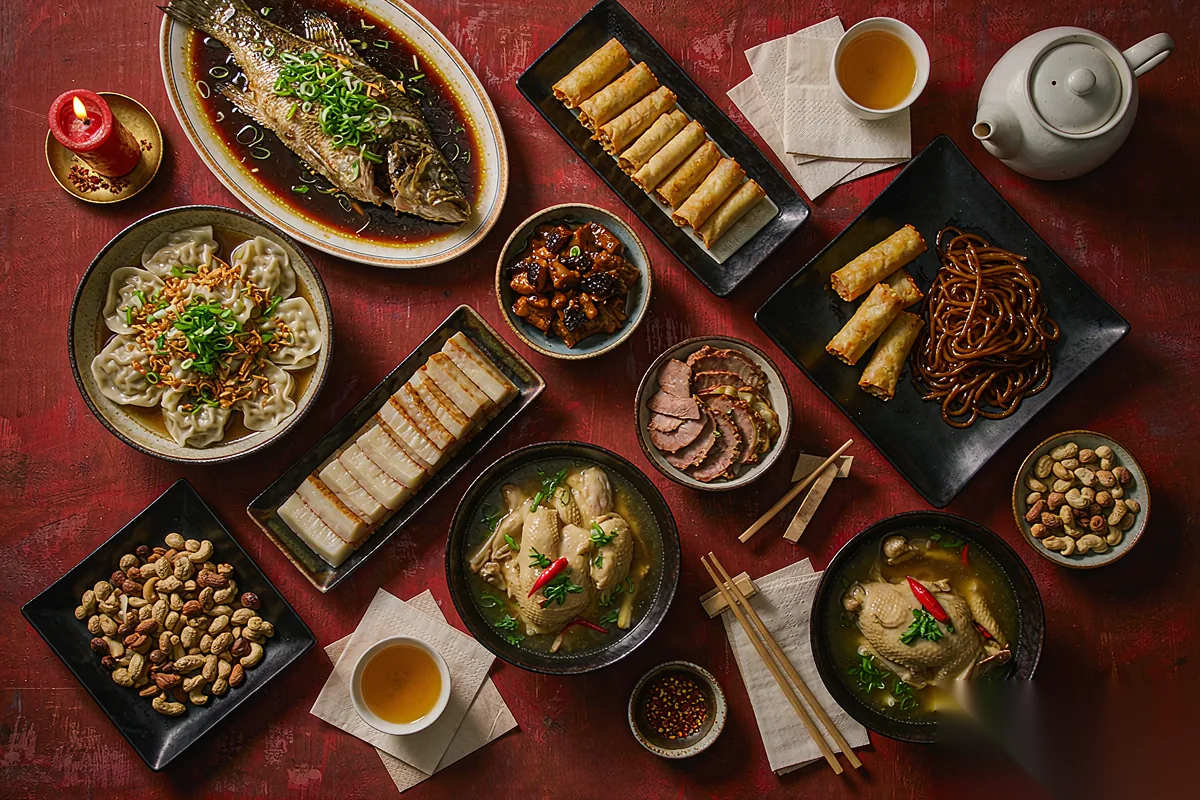
Northern China eats dumplings (饺子, jiǎozi). Their shape resembles ancient gold ingots. The more you eat, the more wealth you’ll have.
Some families hide a coin in one dumpling. Whoever finds it has good luck all year.
Noodles — long life
Long noodles (长寿面) must not be cut. The longer the noodle, the longer the life.
Spring rolls — wealth
Spring rolls (春卷) look like gold bars. Eating them is “eating wealth.”
Nian gao — progress
Nian gao (年糕), a sticky rice cake, sounds like “higher year” (年高). It means “may you rise higher each year.”
Tangyuan — reunion
Glutinous rice balls in sweet soup. Round shape means family together. Often eaten at Lantern Festival, at the end of the New Year period.
What NOT to eat
- Porridge: traditionally eaten by the poor — a bad omen for the year.
- Single chopstick: never. It resembles a funeral offering.
- Bitter melon: “bitter” (苦) sounds like hardship.
The rhythm
The 15 days of New Year have their own food schedule:
- Day 1: dumplings (north), rice cakes (south)
- Day 7: “people’s birthday” — seven-vegetable soup
- Day 15: tangyuan (Lantern Festival)
Want the full story?
Our book Chinese Festivals covers the food, the rituals, and the stories of every major holiday — in plain English.
And The Story of Chinese Food & Tea goes deeper into the kitchen.