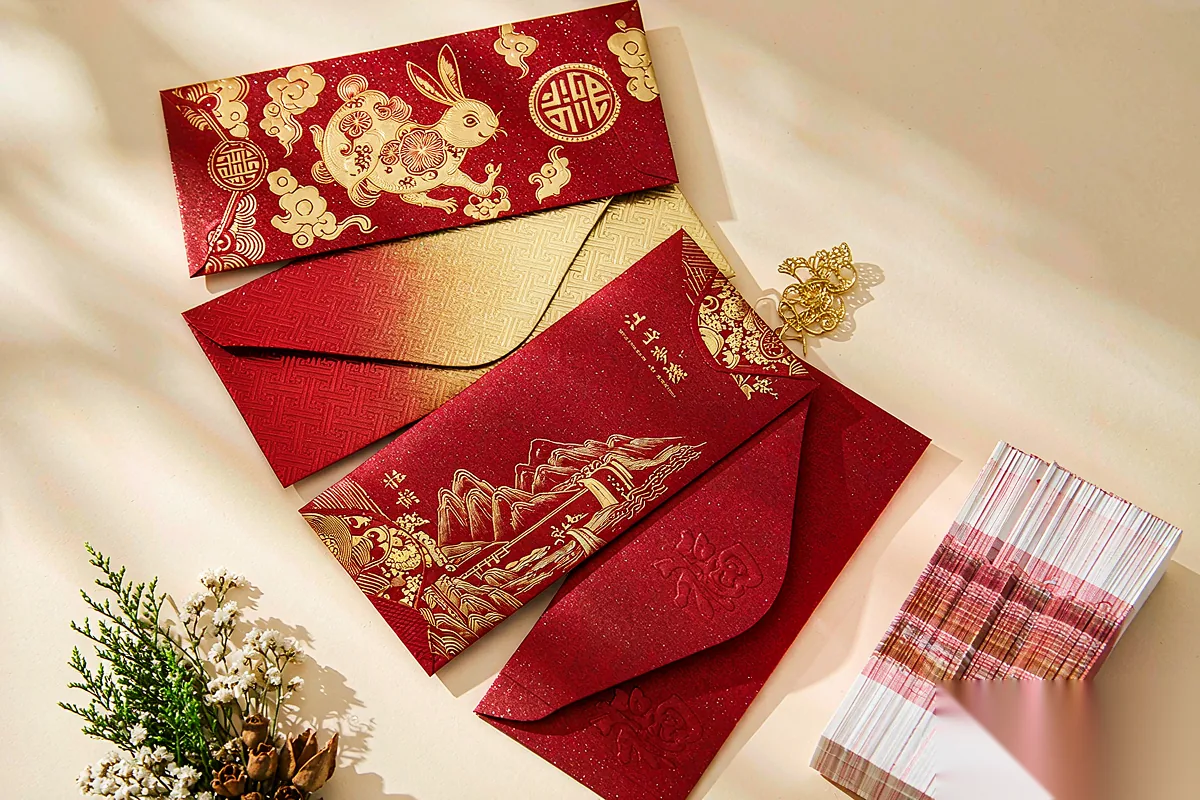
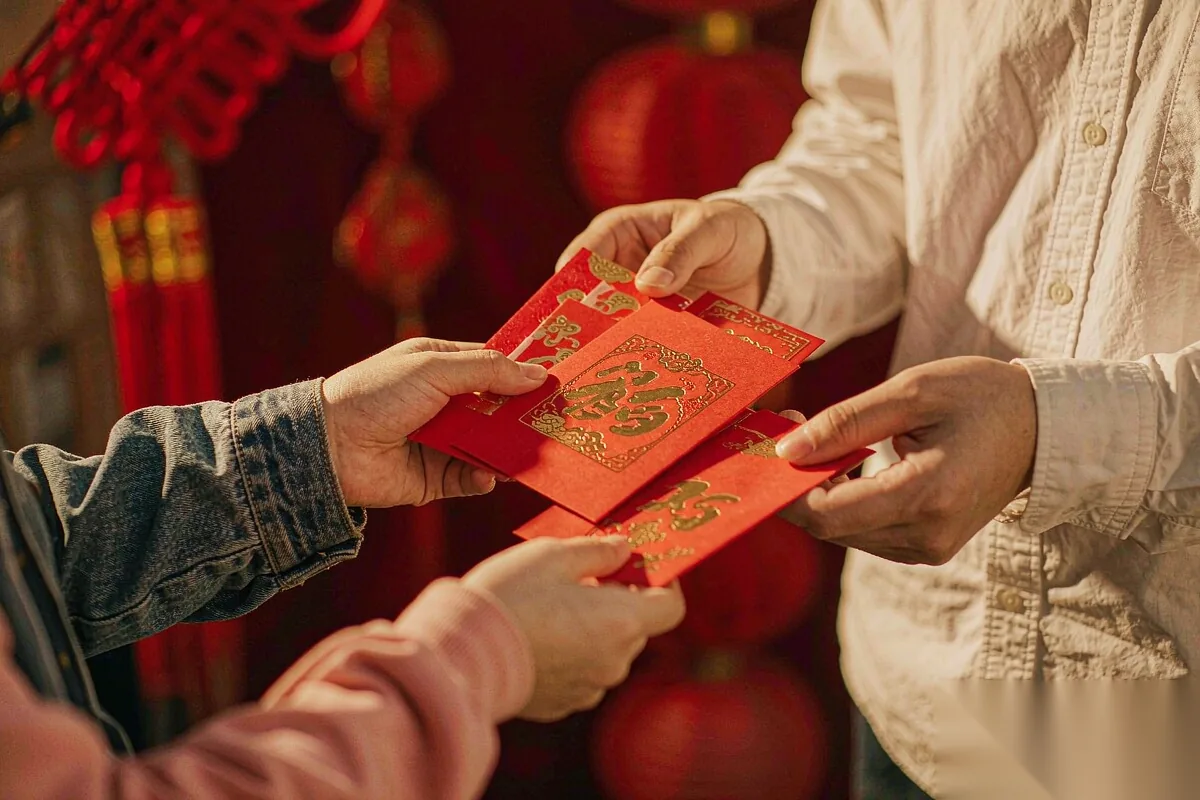
Every Chinese New Year, a small red paper envelope becomes the center of the universe.
It’s called a hongbao (红包) — literally “red packet” — and inside is money. Giving one is a gesture of luck, blessing, and sometimes social strategy.
Here’s how it actually works.
The numbers rule
In Chinese culture, numbers carry meaning:
- 8 (bā) sounds like “prosper” (发, fā) — lucky. ¥88, ¥888, ¥8.88 are all good.
- 6 (liù) sounds like “smooth” — good for “everything going smoothly.” ¥66, ¥666.
- 9 (jiǔ) sounds like “long-lasting” — good for weddings.
- 4 (sì) sounds like “death” — avoided at all costs. Never ¥4 or ¥44.
Even numbers are generally preferred — except 4.
Who gives what
| Giver | Receiver | Usual amount |
|---|---|---|
| Married adults | Children (unmarried) | ¥50–¥500 |
| Working children | Parents | ¥500–¥2,000 |
| Boss | Employees | ¥100–¥500 |
| Anyone (digital) | Anyone | ¥8.88, ¥66.66 |
The key rule: if you’re married and earning, you give. If you’re unmarried, you receive. This is why Chinese New Year is a very good time to be a child, and an expensive time to be an adult.
The color
Red is the color of luck, joy, and protection in Chinese culture. It became the New Year color because of a monster — the Nian — that supposedly feared red. So red became the thing that keeps bad luck away.
A red envelope, then, isn’t just money. It’s a small packet of protection.
Digital red envelopes
Since 2014, WeChat has let people send digital hongbao — and it changed the holiday.
Now families have group chats where someone drops 100 envelopes with a total of ¥200, and everyone races to grab what they can. It’s part gambling, part party game, and very Chinese.
The tradition survived the move to digital. The paper envelope is still preferred for elders and formal occasions, but for friends, the phone is fine.
The etiquette (important)
- Use two hands when giving or receiving.
- Don’t open it in front of the giver (especially at weddings).
- Don’t give an odd amount except in funeral contexts.
- Don’t give ¥4 or amounts containing 4.
- Fresh bills are strongly preferred.
What it means
A red envelope is a blessing with a number attached. It says: “May you be well, may you prosper, may this year be better than the last.”
The amount matters. But the gesture matters more.
Want the full story?
Our book Chinese Festivals covers the New Year traditions around the red envelope — the reunion dinner, the fireworks, the zodiac — in plain English.
And for the monster behind the red, Chinese Folktales tells the story of the Nian.