Every summer, rivers across China fill with long boats carved like dragons, and the air smells of steamed bamboo leaves. It’s the Dragon Boat Festival — one of China’s four biggest holidays, and easily the loudest.
Here’s what it actually is, and why it’s worth knowing.
What is it?
The Dragon Boat Festival (端午节, duānwǔjié) falls on the 5th day of the 5th lunar month — usually June. It’s also called the “Double Fifth” festival, because both numbers are five.
In 2009, UNESCO added it to the world’s intangible cultural heritage list. It was China’s first festival to make that list.
The story behind it
The most popular version goes like this:
Qu Yuan was a poet and minister in the ancient state of Chu, around 300 BC. He was loyal, honest, and — as loyal honest people often are — pushed out of office by rivals. Exiled, he watched his country slide toward ruin. When the capital fell, he walked into the Miluo River and drowned.
Local people rowed out in boats to save him. They beat drums to scare away fish, and threw rice into the water so the fish would eat that instead of him.
Those two acts became the two great traditions: dragon boat racing, and zongzi.
The food: zongzi
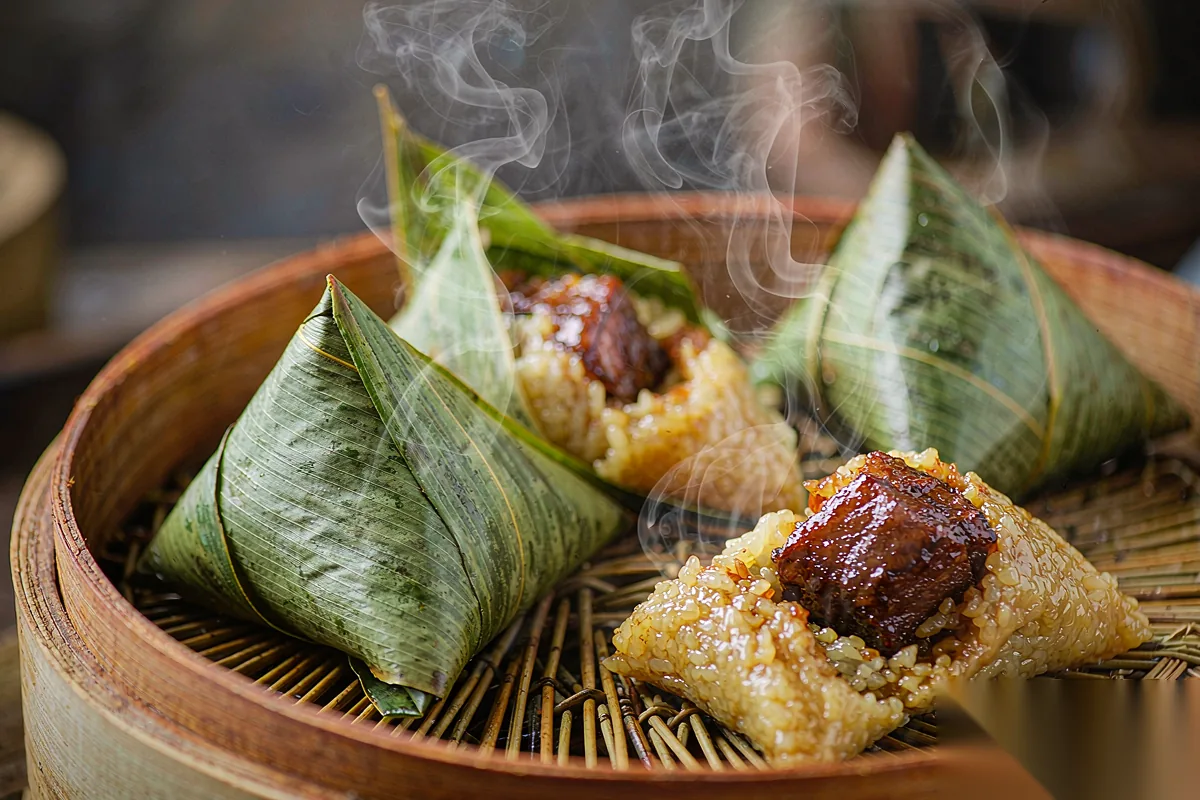
Zongzi are sticky rice dumplings wrapped in bamboo or reed leaves, steamed into a pyramid shape.
The filling depends on where you are:
- South: pork belly, salted egg yolk, mushrooms — savory and rich
- North: red bean paste, dates — sweet
- Everywhere: arguments about which is correct
You unwrap the leaves at the table. It’s messy. That’s part of it.
The race: dragon boats
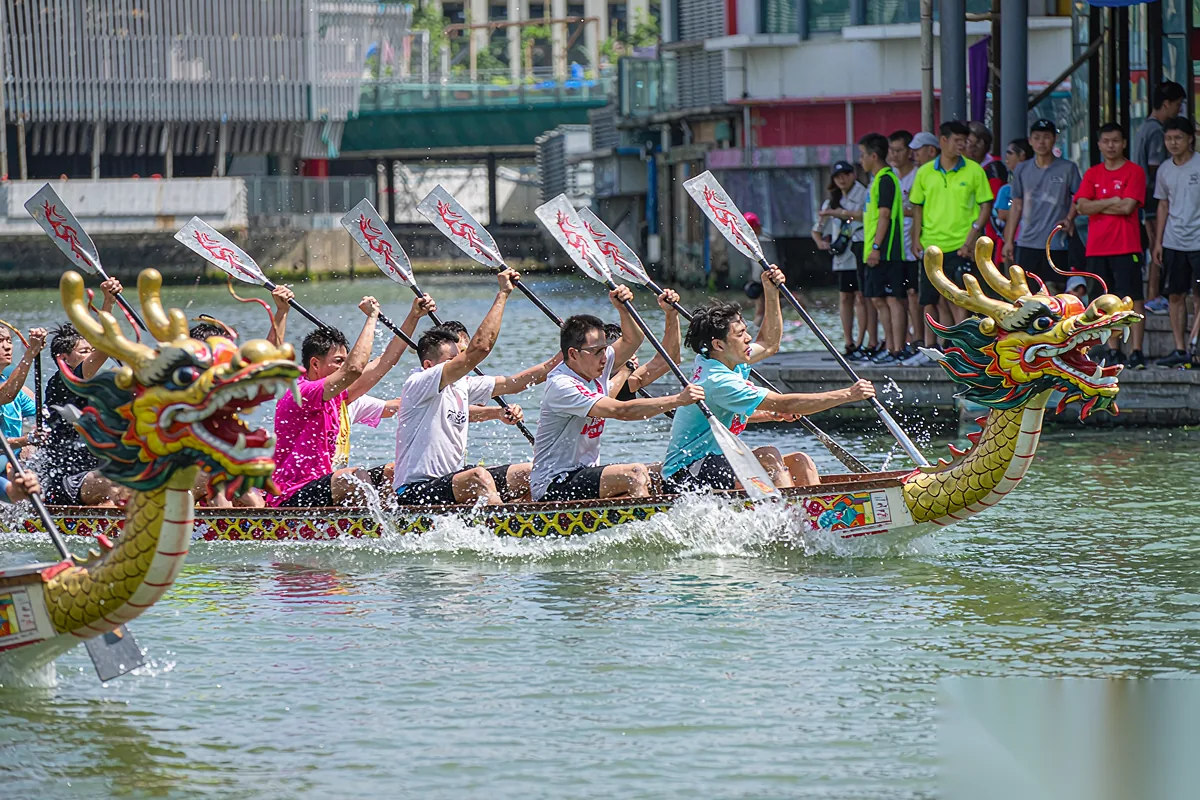
A dragon boat is long, narrow, and steered by a drummer at the front and a steerer at the back. Teams of 20 or more row in sync, and the whole thing is loud, fast, and surprisingly emotional.
The boats are decorated with dragon heads and tails. Before the race, there’s often a “dotting the eyes” ceremony — painting the dragon’s eyes to wake it up.
These days, dragon boat racing happens all over the world, from London to Toronto to Wellington. The festival went global.
The quieter customs
- Hang mugwort and calamus on the door — herbs that supposedly ward off illness (June is mosquito season, so it’s practical too).
- Wear a sachet — a small cloth pouch filled with fragrant herbs.
- Tie five-color threads on children’s wrists.
- Drink realgar wine — a traditional (and slightly dangerous) custom, now mostly symbolic.
All of these are about one thing: health. The festival sits at the start of summer, when disease spreads. The customs are older than germ theory, but they’re aimed at the same target.
Why it still matters
Dragon Boat is China’s “loyalty” festival. It’s about a man who chose integrity over survival — and a people who remembered him for 2,000 years.
It’s also the most fun of the four big festivals. A race, a picnic, and a very good dumpling.
Want the full story?
Our book Chinese Festivals covers Dragon Boat, Spring Festival, Qingming, and Mid-Autumn — the stories, the food, and why each one matters.
And if you want more of the old stories, Chinese Folktales is the natural next read.