Why does Chinese New Year move every year? Why does it sometimes fall in January and sometimes in February? And why does a lunar month sometimes have 29 days and sometimes 30?
All of it comes down to one thing: the Chinese calendar isn’t lunar. It’s lunisolar — it tracks both the moon and the sun.
Here’s the plain-English version.
The problem with pure lunar calendars
A lunar month (one full cycle of moon phases) is about 29.5 days. Twelve of those make 354 days — about 11 days short of a solar year (365 days).
If you only follow the moon, your calendar drifts. After a few years, “spring” happens in autumn. That’s a problem if you’re a farming society.
The fix: add a month
The Chinese calendar solves it with leap months.
Every 2–3 years, it adds an entire extra month to keep the calendar aligned with the seasons. That’s why Chinese New Year lands between January 21 and February 20 — it’s re-anchored to spring every year.
So the Chinese calendar is a hybrid: lunar months, solar years, with leap months to keep them in sync.
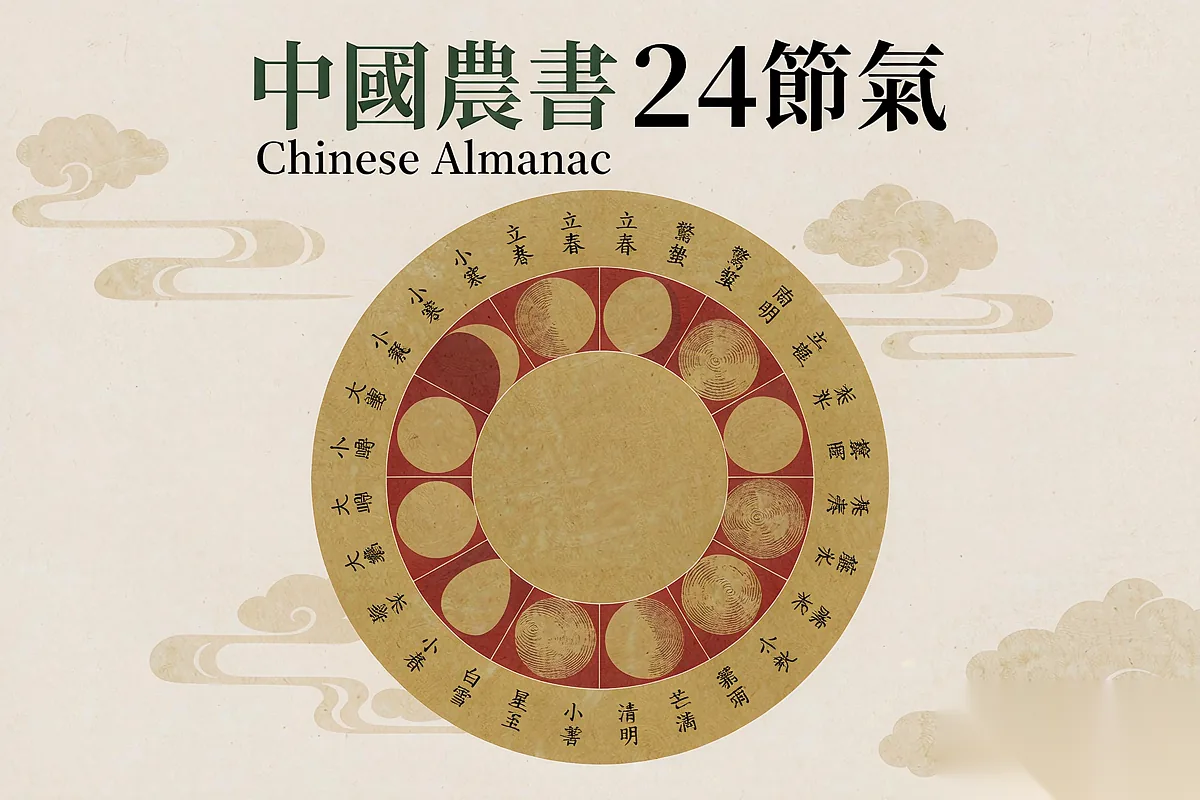
The 24 solar terms
The calendar also divides the year into 24 “solar terms” (节气, jiéqì) — markers based on the sun’s position.
They have beautiful names: “Clear and Bright” (Qingming), “Grain Rain,” “White Dew,” “Great Snow.” Each one marks a point in the farming year.
Qingming is both a solar term and a festival — the two systems overlap.
Why months are 29 or 30 days
Because the moon’s cycle isn’t a round number. A lunar month is 29.53 days. So months alternate between 29 and 30 days, with occasional adjustments.
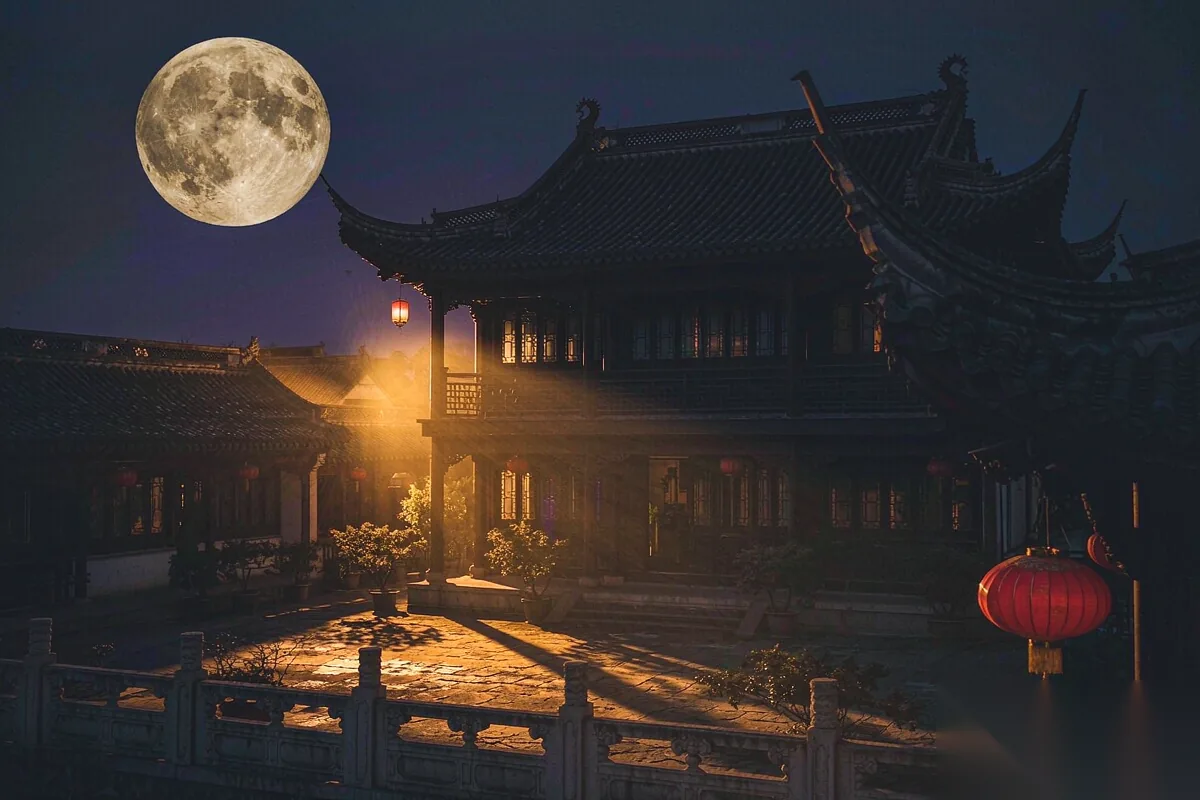
That’s why the 15th of every lunar month is always a full moon. The calendar is built around it.
Why it matters
If you understand the lunisolar calendar, a lot of Chinese culture suddenly makes sense:
- Why festivals move every year (they’re tied to lunar dates)
- Why the 15th is always full-moon (Mid-Autumn, Lantern Festival)
- Why “Qingming” is about the sun, not the moon
- Why some years have 13 months
It’s not a quirk. It’s a 2,000-year-old piece of engineering.
Want the full story?
Our book Chinese Festivals walks through the calendar’s biggest dates — and explains why each one falls when it does.
For the stories that fill those dates, Chinese Folktales is the natural companion.