Once a year, Chinese bakeries go slightly insane.
Shelves fill with mooncakes — dense, round pastries stuffed with lotus seed paste, salted egg yolks, red bean, even ice cream. People buy them in ornate boxes, give them to relatives, and complain about the calories while eating a second one.
But why mooncakes? Why the moon? And what is Mid-Autumn actually celebrating?
Here’s the plain-English version.
What is Mid-Autumn Festival?
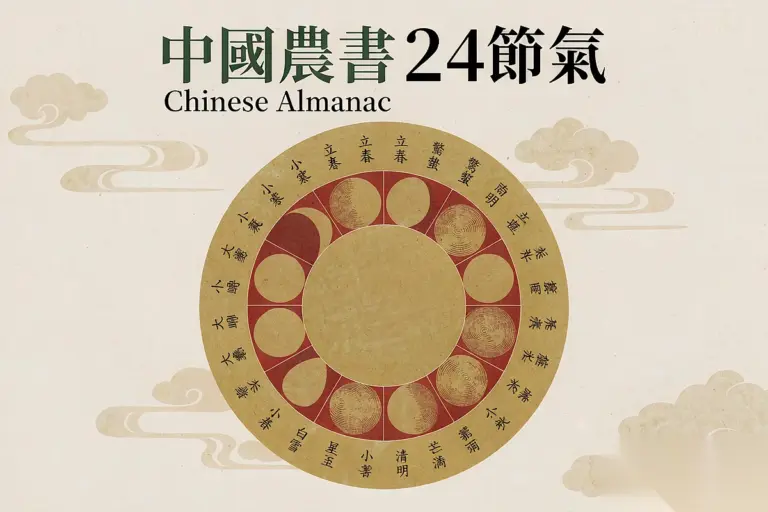
Mid-Autumn Festival (中秋节, zhōngqiūjié) falls on the 15th day of the 8th lunar month — usually late September or early October, when the moon is at its roundest and brightest.
It’s one of China’s three biggest holidays, alongside Spring Festival and Dragon Boat Festival. But unlike Spring Festival’s noisy chaos, Mid-Autumn is quiet. It’s about looking at the moon, eating with family, and thinking about people who aren’t there.
The moon goddess
The festival’s most famous story is about Chang’e — the moon goddess.
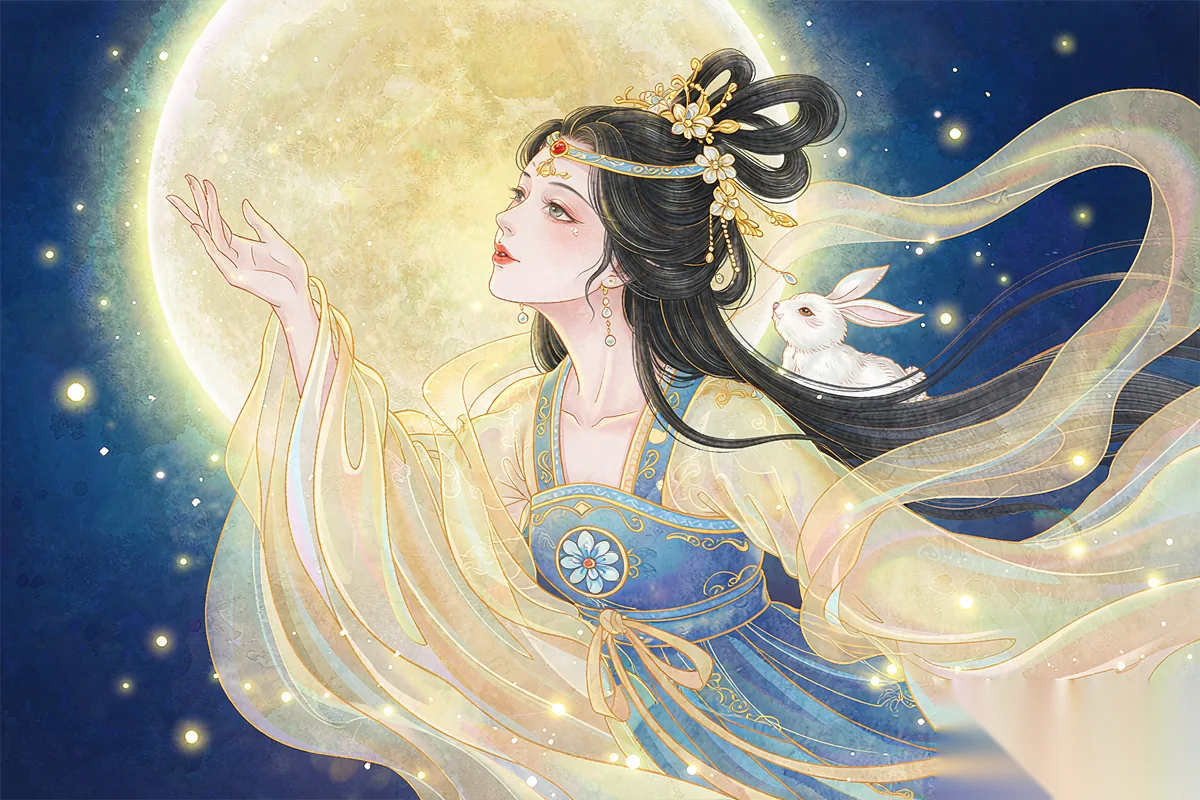
The short version: there were once ten suns in the sky, scorching the earth. A hero named Hou Yi shot down nine of them and was rewarded with an elixir of immortality. His wife, Chang’e, drank it — by accident or on purpose, depending on the version — and floated up to the moon.
Hou Yi was devastated. He started leaving her favorite foods out under the full moon. And that, supposedly, is why we eat mooncakes and gaze at the moon.
It’s a sad story. But it’s also a beautiful one — and it explains why the moon, in Chinese culture, is less about romance and more about longing.
Why mooncakes?
The round shape is the point. Round means reunion, wholeness, “everyone together.” A mooncake is basically an edible symbol of that wish.
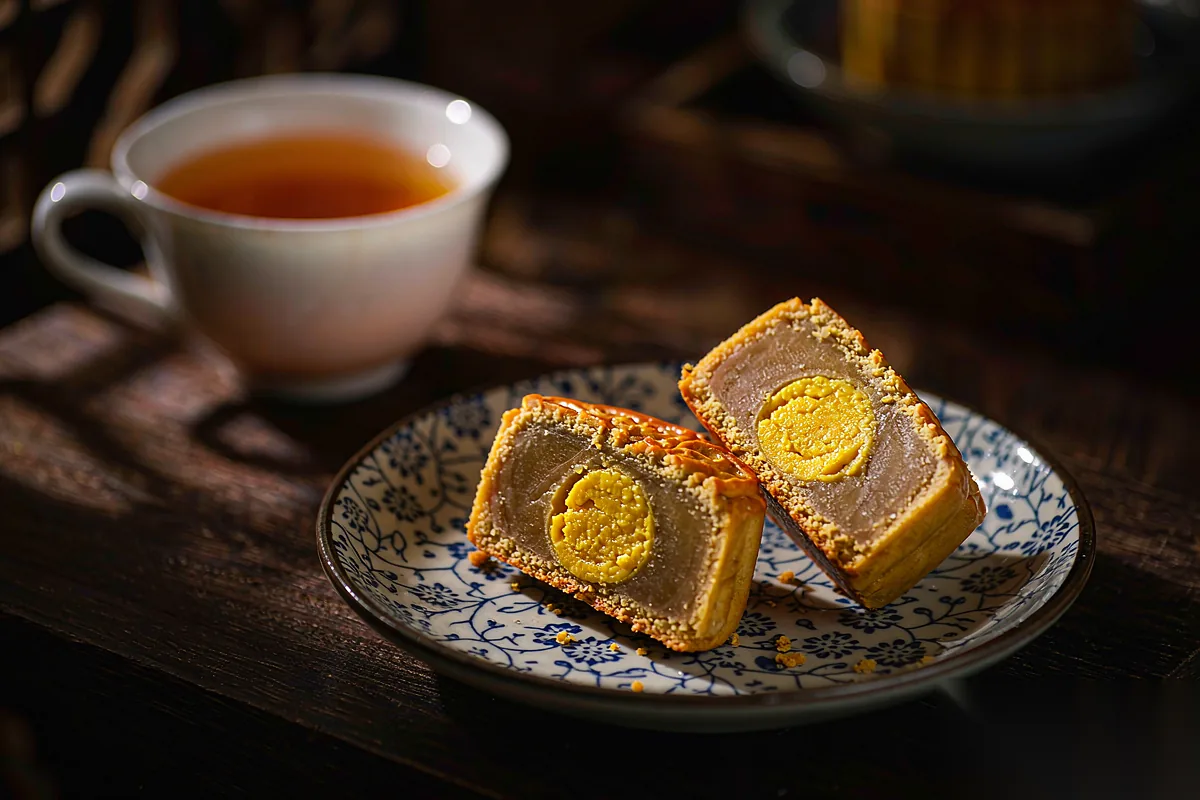
The fillings vary wildly by region:
- Cantonese: lotus seed paste with salted egg yolk (the classic)
- Suzhou: flaky pastry with pork or sweet fillings
- Yunnan: ham and honey
- Modern: ice cream, chocolate, matcha, even durian
The salted egg yolk in the middle is meant to represent the full moon. Some people love it. Some people pick it out. Both are valid.
What actually happens
On Mid-Autumn night, families gather, eat dinner, and then sit outside — or on a balcony — to look at the moon. Kids carry lanterns. Adults drink tea. Someone always says, “The moon is so round this year.”
In Chinese poetry, the moon is a way to talk about missing someone. The most famous line, from Su Shi, roughly says: “May we all live long, and share the moon’s beauty, though miles apart.”
That’s the mood. Not loud. Not commercial. Just quiet, and a little wistful.
Why it still matters
In a country that moves fast, Mid-Autumn is one of the few nights when people actually stop.
You don’t have to be Chinese to feel that. You just have to look up.
Want to go deeper?
If you want the full picture — all the festivals, all the stories, all the food — our book Chinese Festivals covers them plainly. And if you liked the Chang’e story, Chinese Folktales has plenty more where that came from.
Both are short reads. Perfect for a moonlit night.