Chinese weddings are loud, red, and full of rules. Many are ancient; some are new; all of them mean something.
Here’s the plain-English guide.
Before the wedding
- Matching horoscopes: traditionally, families consult a fortune teller to check the couple’s zodiac compatibility.
- Betrothal gifts (彩礼): the groom’s family gives gifts or money to the bride’s family — still common, though increasingly debated.
- Dowry (嫁妆): the bride’s family sends goods to the new household.
- Setting a date: chosen by consulting the lunar calendar for an auspicious day.
The red dress
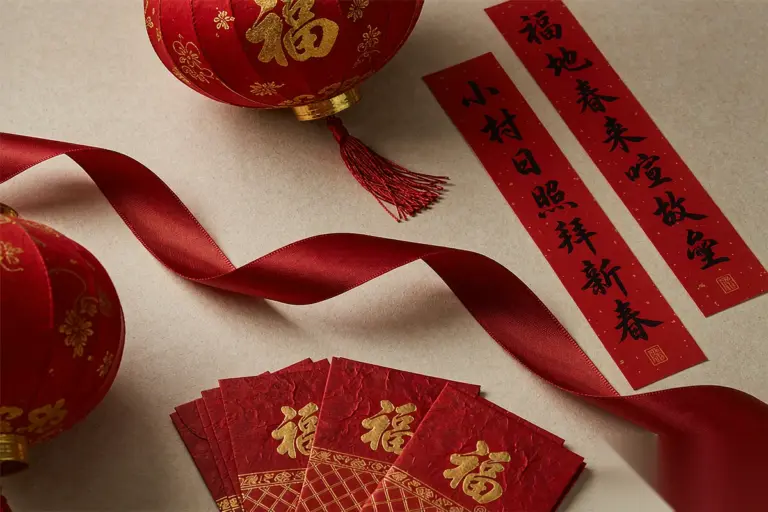
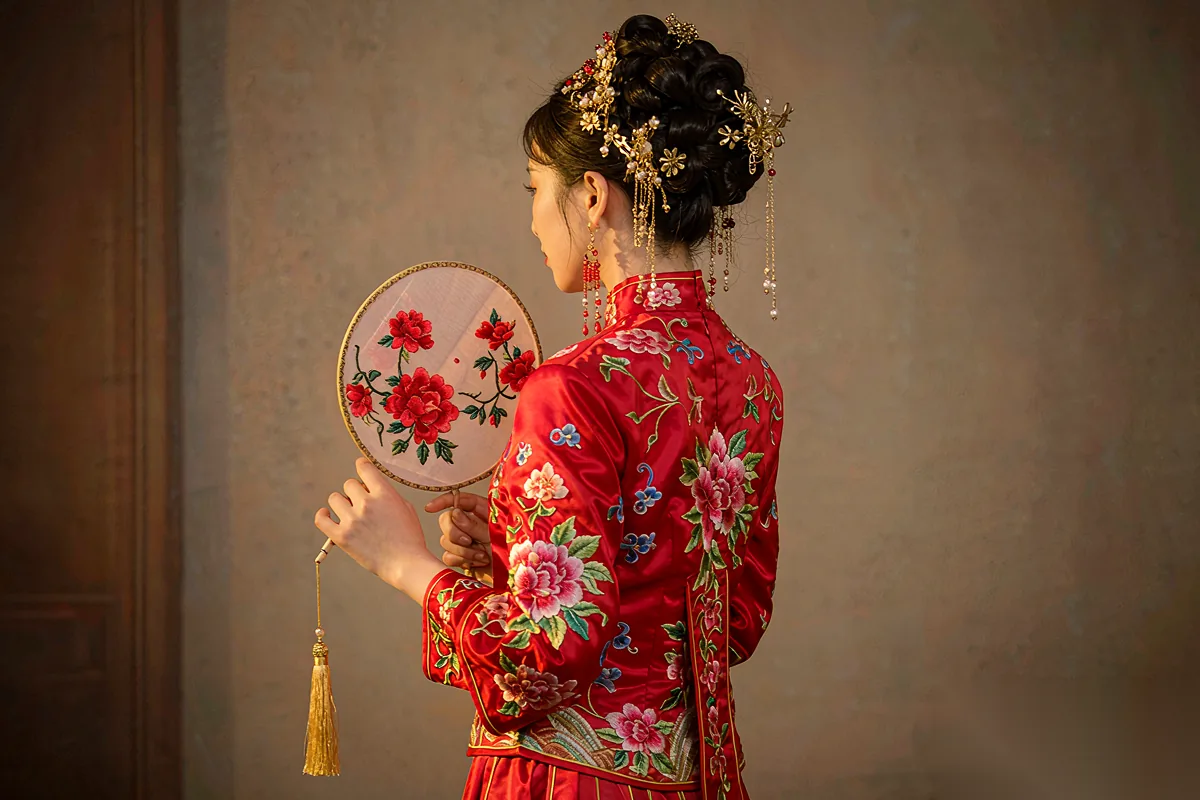
The bride wears red — the color of joy and luck. Modern brides often wear a white gown for the ceremony and change into a red qipao for the banquet. The red one is the traditional one.
The tea ceremony
This is the heart of the wedding. The couple kneels and offers tea to their parents and elders. In return, they receive red envelopes and blessings.
The order matters: the groom’s parents first, then the bride’s. It’s a formal introduction of the couple to both families.
The door games
Before the groom can see the bride, her friends block the door and demand — money, songs, silly tasks. It’s playful, chaotic, and one of the most photographed moments.
The banquet
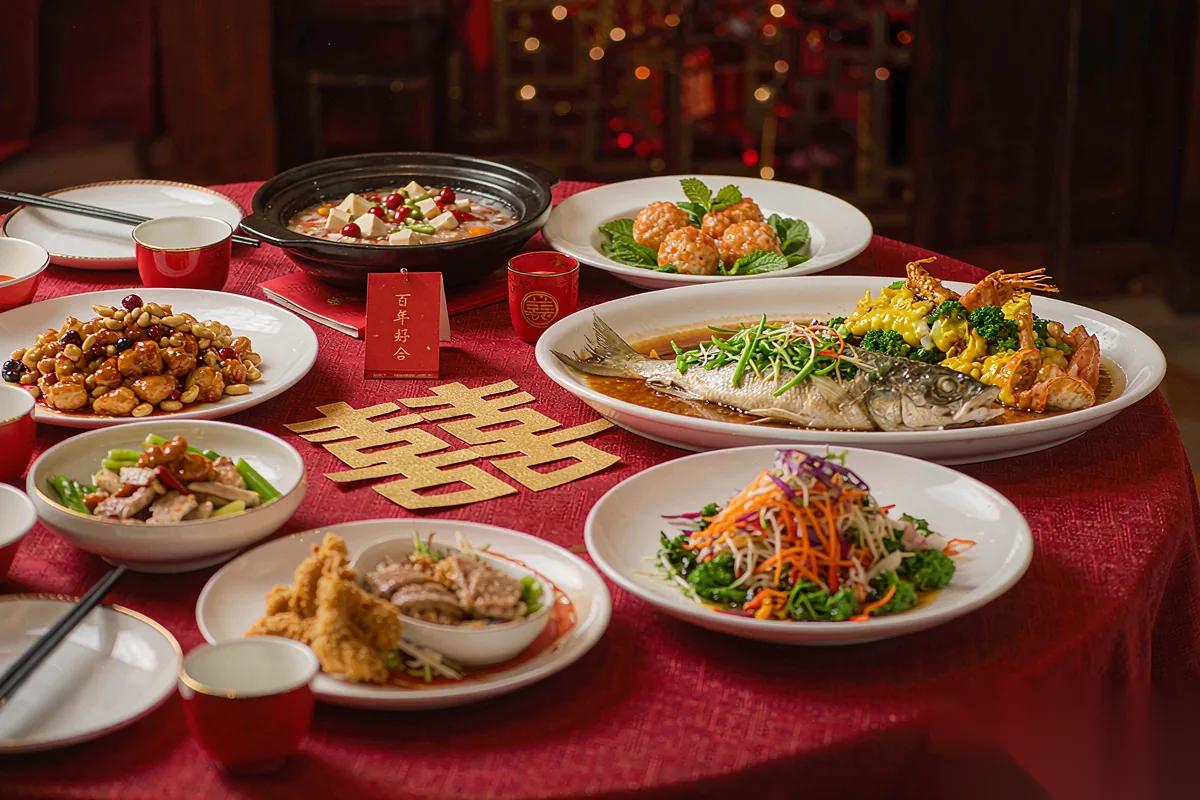
A Chinese wedding banquet is big. Ten courses, round tables, endless toasts. The couple goes table to table, drinking with guests.
Fish is served (abundance). Noodles are served (long life). Nothing is accidental.
What things mean
| Element | Meaning |
|---|---|
| Red | Joy, luck, warding off evil |
| Dragon and phoenix | The couple, in harmony |
| Double happiness (囍) | Two joys side by side |
| Fish | Abundance (sounds like “surplus”) |
| Noodles | Long life |
| Dates and peanuts | Fertility (the words pun on “early child”) |
Modern changes
Young couples increasingly skip the betrothal gifts, the door games, or the big banquet. Destination weddings and small ceremonies are growing.
But the tea ceremony almost always stays. It’s the part that actually matters.
Want the full story?
Our book Chinese Festivals covers the celebrations around the year — and Chinese Folktales has the love stories behind some of the traditions.