Chinese calligraphy is often called the highest form of Chinese art. Not painting, not poetry — calligraphy.
Why? Because for 2,000 years, how you wrote mattered as much as what you wrote. A single character could show discipline, emotion, and character (in both senses).
Here’s what it actually is, and how to look at it.
It’s writing, but not just writing
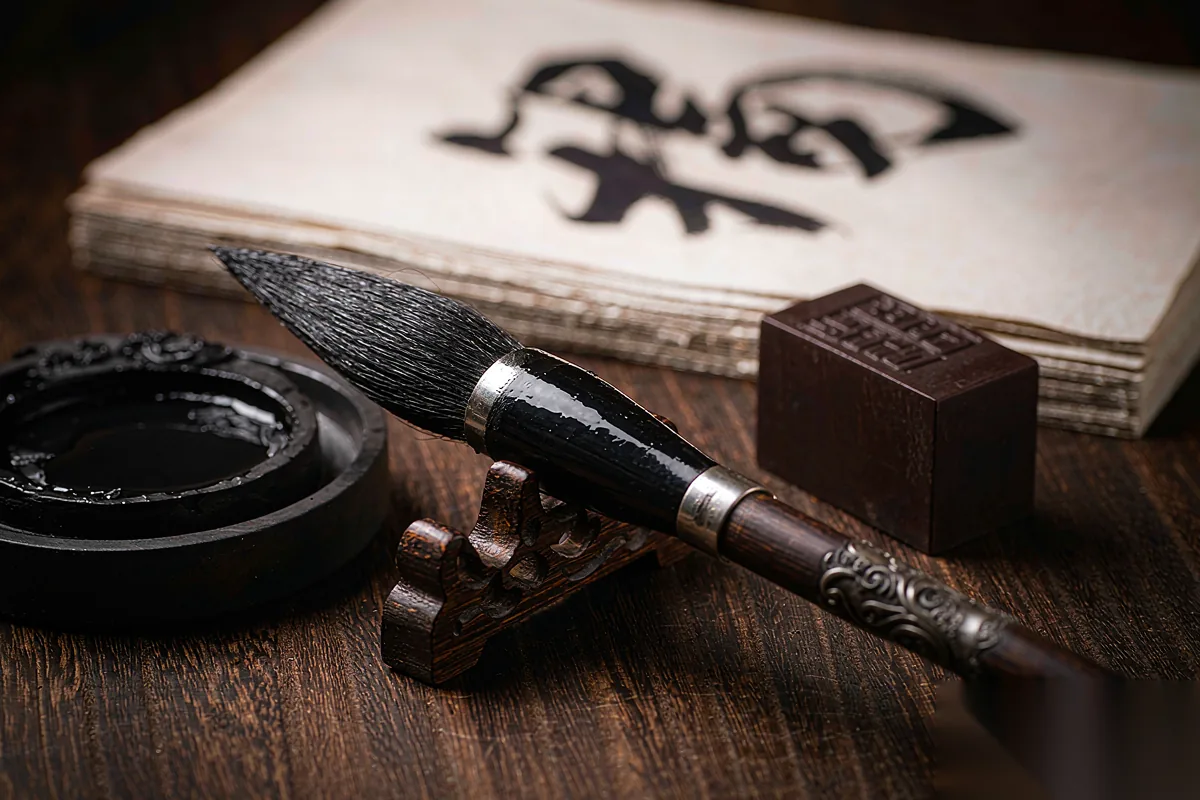
Calligraphy uses the same characters as everyday Chinese, but with four tools: brush, ink, inkstone, and paper. Together they’re called the “Four Treasures of the Study” (文房四宝).
The brush is soft and flexible. Pressure, speed, and angle all change the stroke. That’s why calligraphy feels alive — every mark records a movement.
The five script styles
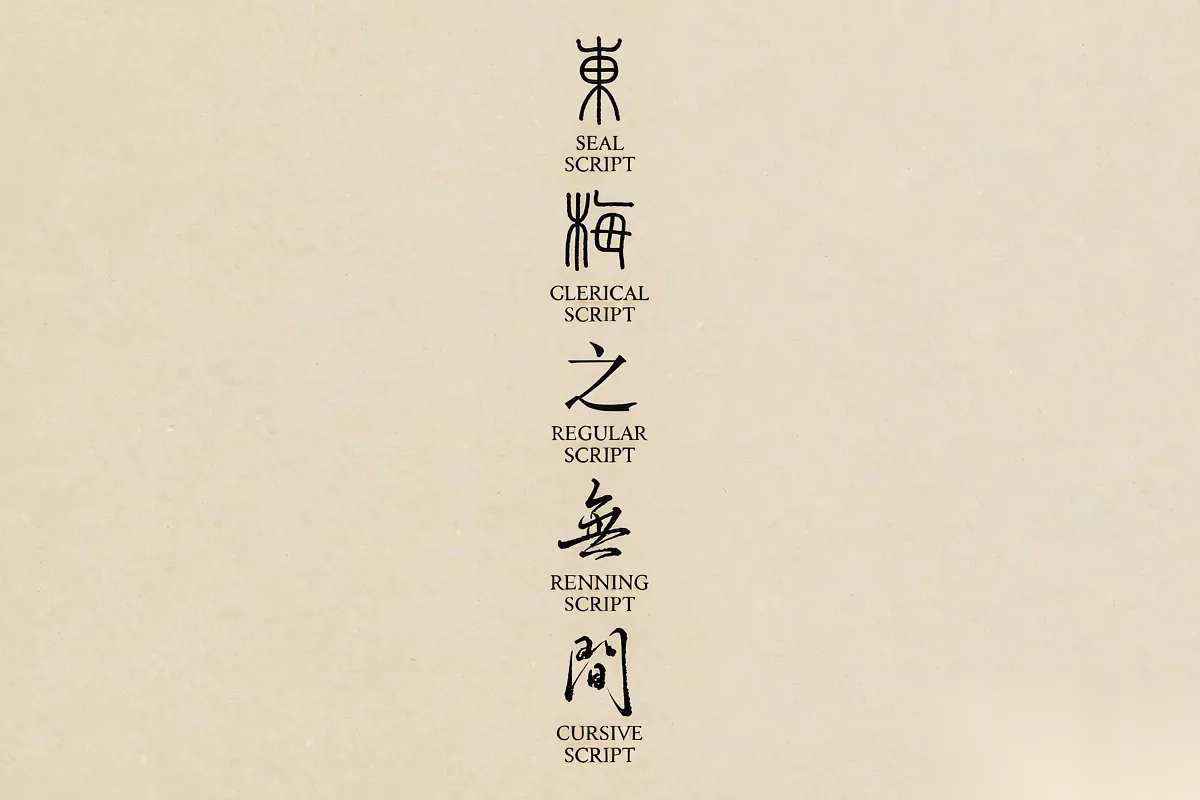
- Seal script (篆书) — the oldest, rounded and even.
- Clerical script (隶书) — flatter, with distinctive sweeping strokes.
- Regular script (楷书) — the standard, clear and balanced. What beginners learn.
- Running script (行书) — semi-cursive, flowing but readable.
- Cursive script (草书) — wildly abbreviated, almost abstract.
Regular script is where you start. Cursive is where masters play.
How to look at it
You don’t need to read Chinese to appreciate calligraphy. Look for:
- Balance: does the character feel stable, or is it falling over?
- Rhythm: are the strokes connected in a flow, or stiff?
- Contrast: thick versus thin, wet versus dry ink.
- Energy: does it feel alive?
A great character looks like it was written in one breath — even if it took fifty tries.
What the tools feel like
The brush is the hard part. It’s soft, so it wobbles. Beginners press too hard and get fat, blobby strokes. The trick is to hold it upright and let the tip do the work.
Ink is ground from a solid stick on the inkstone, mixed with water. It’s a slow, meditative process — part of the practice.
Why it matters
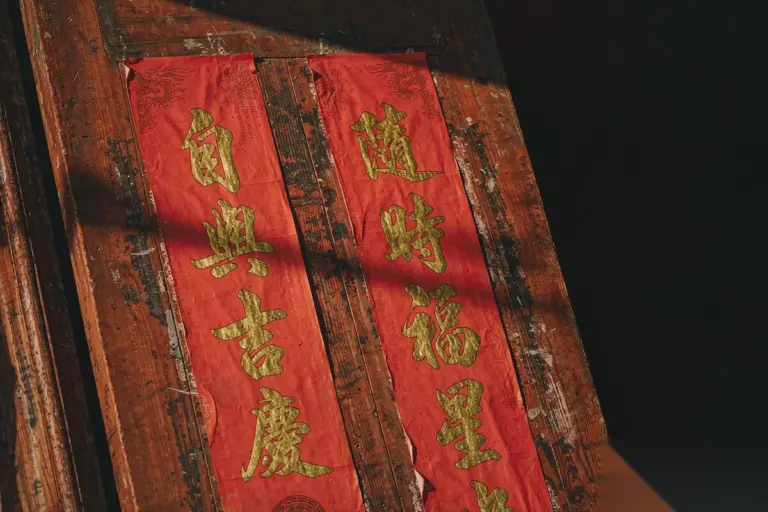
Calligraphy is China’s “art of the everyday.” It’s on shop signs, temple plaques, scrolls, and walls. Learning to look at it opens a door into Chinese aesthetics.
You don’t have to write it. Just learning to see it is enough.
Want the full story?
Our book Chinese Folktales pairs traditional stories with the culture around them — and Great Chinese Architecture shows where calligraphy lives on buildings and plaques.